Inside Yu Pack Factory: How Custom Packaging Bags and Roll Film Are Manufactured

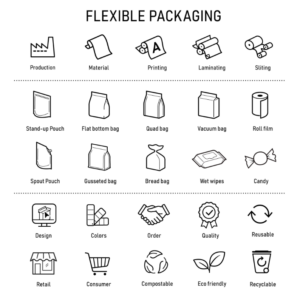
In the competitive world of retail and food products, custom flexible packaging plays a critical role. Beyond catching the consumer’s eye, high-quality packaging extends shelf life, preserves freshness, and protects product integrity during transit.

At Yu Pack (Foshan Yucai Plastic Packaging Products Co., Ltd.), raw plastic resin and substrate films are transformed into high-performance roll films and custom prefabricated packaging bags through a precise, engineering-driven process. Here is an inside look at how custom packaging is manufactured from initial design to final delivery.

Design, Pre-Press, and Cylinder Engraving

Every custom packaging project begins with digital artwork. The client’s brand design undergoes a rigorous pre-press process to ensure color accuracy and print alignment.

  • Artwork Approval: Designers verify vector graphics, bleed areas, text resolution, and color profiles (Pantone / CMYK).

  • Plate / Cylinder Engraving: For high-speed rotogravure printing, artwork is laser-engraved onto steel cylinders coated with copper and chrome. Each color in the design requires its own distinct cylinder.

Precision Printing

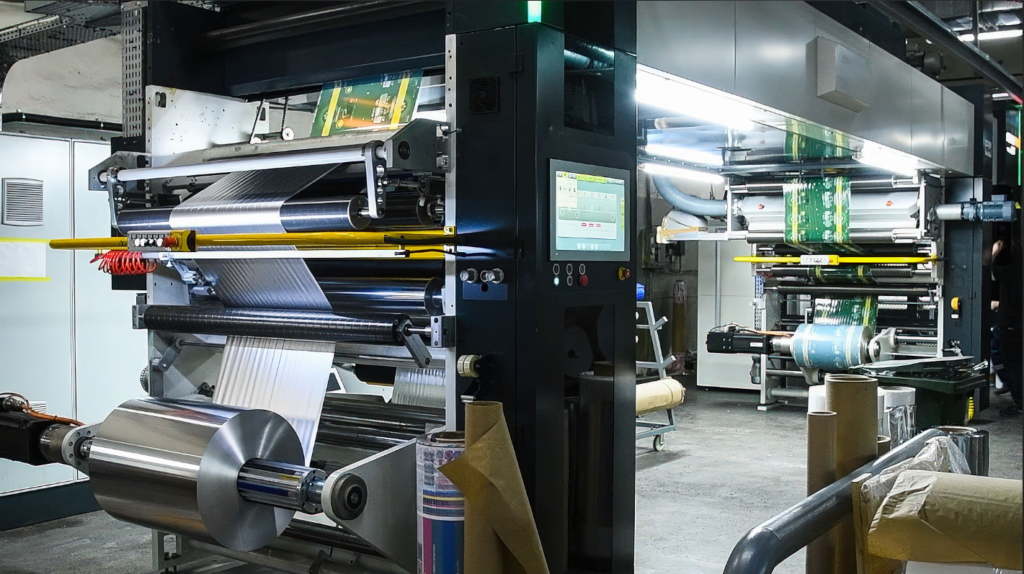
Once the cylinders are mounted on the high-speed printing press, the substrate film—such as PET, BOPP, or Kraft paper—passes through multiple ink stations.

  • Rotogravure Printing: Delivers sharp, photo-realistic graphics, vibrant gradients, and consistent colors across large production runs.

  • Inline Drying: High-efficiency drying tunnels evaporate solvent carriers between color stations, locking the ink into place without bleeding.

Multi-Layer Lamination

 Single-layer films rarely provide all the properties needed for modern products. Lamination combines distinct film layers to build custom structural barriers.
 

Curing (Maturation)

After lamination, the laminated film rolls are transferred to temperature-controlled curing chambers.

  • Cross-Linking: Curing allows the multi-layer adhesive to fully cross-link and cure.

  • Quality Assurance: This step ensures the layers will not delaminate under pressure, extreme temperatures, or prolonged storage. Curing typically takes 24 to 72 hours depending on the adhesive formulation.

Common Material Structures:


  • Outer Layer (Print Surface): PET or Matte BOPP for premium visual appeal and heat resistance.

  • Barrier Layer (Protection): Aluminum Foil (AL), VMPET (Metallized PET), or EVOH to block oxygen, moisture, UV light, and aroma loss.

  • Inner Layer (Heat Sealable): LLDPE (Linear Low-Density Polyethylene) or CPP for safe direct food contact and reliable heat seals.

  • Lamination Techniques: Solvent-less lamination or dry bond lamination is used depending on the barrier requirements and chemical resistance needed for the contents.

Slitting and Roll Film Production

For clients operating automated Form-Fill-Seal (FFS) packaging equipment, the manufacturing process completes at the slitting stage.

1.Master Roll Unwinding:Precision tension control。

The wide, cured master roll is mounted onto high-speed automatic slitting machinery.

2.Precision Blade Slitting:Custom width specifications。

Industrial circular blades slice the wide substrate roll into exact custom widths specified by the client’s automated packaging machinery.

3.Roll Rewinding and Inspection:Defect detection and tension monitoring。

The slit films are rewound onto sturdy cardboard cores under controlled tension. Optical sensors continuously scan for print defects or alignment deviations.

The resulting finished Roll Film is labeled, moisture-wrapped, and prepared for direct factory shipment.

Pouch Converting and Bag Making

If the client requires ready-to-fill prefabricated bags, the slit rolls move to the bag-converting shop floor.
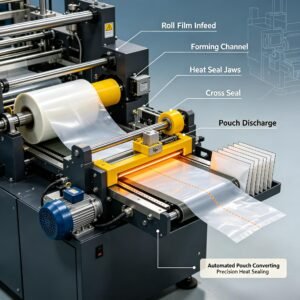
Using high-precision pouch-making machines, the film undergoes:

  1. Folding and Gusseting: Creating bottom gussets for stand-up pouches or side gussets for coffee and tea bags.

  2. Accessory Integration: Ultrasonic or thermal application of reclosable zippers, tear notches, degassing valves, or pour spouts.

  3. Thermal Sealing & Cutting: Precision heat-sealing bars apply exact temperature and pressure to form leak-proof side and bottom seals before cutting individual bags.

Quality Control and Testing

Before packaging and shipping, YUPACK’s quality assurance team conducts strict testing on batch samples:

Test TypeObjective
Seal Strength TestVerifies heat seals resist bursting under pressure or vacuum.
Puncture ResistanceEnsures sharp items (e.g., dry snacks, coffee beans) will not pierce the film.
Friction / Slip TestChecks surface friction coefficient for smooth performance on client FFS lines.
Solvent Residue AnalysisConfirms compliance with international food safety and food-contact standards.

Custom Packaging Summary

Whether producing custom-printed roll films for high-volume automated lines or prefabricated stand-up pouches, flat-bottom bags, and spout pouches, YUPACK integrates advanced machinery, strict material selection, and rigorous quality control to deliver packaging solutions tailored to global brand standards.

SEND MESSAGE

滚动至顶部

request a quotation

SEND MESSAGE

+8613322829410


yun411032550@outlook.com