
The Science of Keeping Products Fresh
In the flexible packaging industry, product shelf life depends heavily on the middle barrier layer of a laminated film structure. Whether packaging specialty coffee beans, crispy snacks, or sensitive milk powders, shielding contents from atmospheric moisture, oxygen, and light is critical to preventing degradation and oxidation.
Two of the most widely used metallic barrier materials are Aluminum Foil (AL) and Metallized Polyester Film (VMPET). Understanding the material science and functional differences between them helps brand owners make informed decisions for their custom packaging.
Aluminum Foil (AL): The Ultimate Pure Barrier
Aluminum foil consists of pure aluminum rolled into thin sheets (typically 6 to 9 microns thick). It creates a physical, non-porous barrier that provides absolute protection against environmental elements.
Barrier Performance: Provides near-zero Water Vapor Transmission Rate (WVTR) and Oxygen Transmission Rate (OTR). It blocks 100% of light and ultraviolet rays.
Puncture & Temperature Resistance: Delivers high heat resistance, making it ideal for high-temperature retort processes and long-term shelf storage.
Key Applications: Heavy-duty Freezing Vacuum Bags, premium roasted Coffee Bags, liquid sauce Spout Pouches, and high-fat Pet Food Packaging.
Metallized Film (VMPET): The Flexible & Cost-Effective Alternative
Metallized film is created through a vacuum deposition process, where a microscopic layer of evaporated aluminum is sprayed onto a polymer substrate (such as PET or CPP).
Flexibility & Flex-Crack Resistance: Because the metallic layer is microscopic, VMPET remains highly flexible. Unlike pure aluminum foil, it is less prone to pinholes or micro-cracks caused by repeated folding and handling during transit.
Cost Efficiency: Offers excellent moisture and light barriers at a significantly lower material weight and cost, making it ideal for mass-market products.
Key Applications: Single-serve Roll Film for stick pack powders (coffee, tea, drink mixes), Stand-Up Pouches for daily snacks, cookies, and candy.
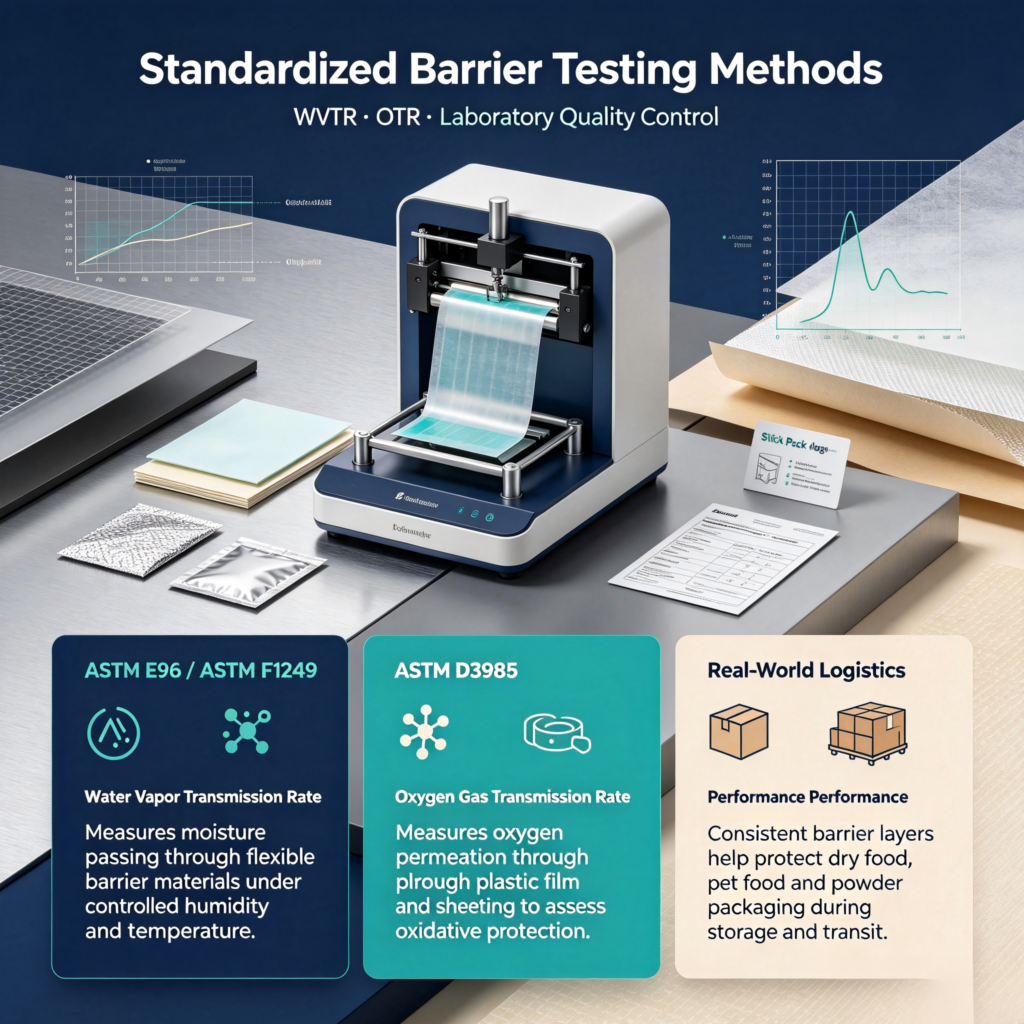
Standardized Barrier Testing Methods
To ensure barrier layers perform consistently under real-world logistics conditions, raw materials are evaluated using standardized laboratory testing protocols:
ASTM E96 / ASTM F1249: Standard test methods for Water Vapor Transmission Rate (WVTR) through flexible barrier materials.
ASTM D3985: Measures Oxygen Gas Transmission Rate (OTR) through plastic film and sheeting.
According to global guidelines maintained by the U.S. FDA Food Contact Packaging Standards, both aluminum foil and food-grade VMPET laminates are fully compliant for direct food contact when correctly laminated with safe seal layers (such as PE or CPP).
Partnering with Yupack for Custom Material Structures
Selecting between AL and VMPET depends on your product’s sensitivity, target shelf life, and budget goals. At Yupack, our technical team helps brands design the optimal multi-layer film structure tailored to their specific processing and distribution needs.
Unsure which barrier structure is best for your product line?
Visit our product page to explore our Stand-Up Pouch and Roll Film structural options, or contact our team today to request custom material sample swatches!