High Barrier Films in Modern Food Packaging
In the modern food processing and packaging industry, preserving product freshness, retaining aroma, and extending shelf life without adding chemical preservatives are paramount. High barrier films in modern food packaging have emerged as the backbone of flexible packaging solutions, protecting perishable goods from external environmental factors.
Whether packaging roasted coffee beans, processed meat, ready-to-eat meals, or delicate snacks, selecting the right high-barrier structure is critical to reducing food waste and brand reputation damage.
What Are High Barrier Films?
High barrier films are specialized multilayered or coated flexible polymer structures designed to restrict the passage of atmospheric gases (oxygen, nitrogen, carbon dioxide), moisture vapor, light, and aroma compounds.
By controlling the Oxygen Transmission Rate (OTR) and Water Vapor Transmission Rate (WVTR), high-barrier packaging maintains the internal modified atmosphere (MAP), preventing oxidation, microbial growth, and texture degradation.
Key Performance Indicators: OTR vs. WVTR
When evaluating high barrier materials, two standardized metrics dictate performance:
Oxygen Transmission Rate (OTR): Measured in cc/m²/24h. Lower OTR values prevent lipid oxidation, color fading, and aerobic bacteria proliferation (crucial for meat, coffee, and nuts).
Water Vapor Transmission Rate (WVTR): Measured in g/m²/24h. Lower WVTR values prevent moisture gain or loss (critical for dry powders, crispy snacks, and pet food).
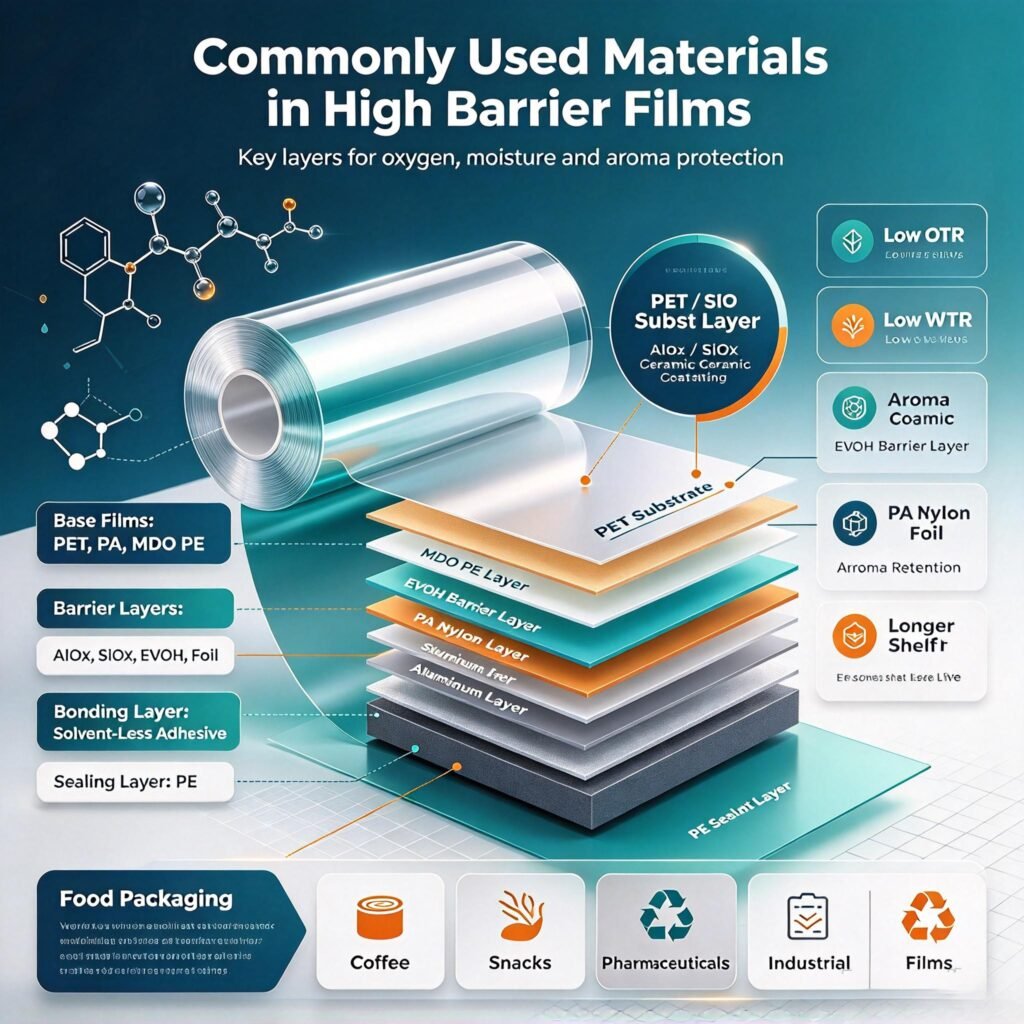
Commonly Used Materials in High Barrier Films
Modern food packaging leverages a combination of synthetic polymers, aluminum foils, and inorganic coatings to balance protection, transparency, and mechanical strength.
| Material | Key Characteristics | Best Used For |
| EVOH (Ethylene Vinyl Alcohol) | Exceptional oxygen & aroma barrier; gas sensitive if exposed to humidity (requires sandwich layer). | Processed meat, cheese, modified atmosphere packaging (MAP). |
| PVDC (Polyvinylidene Chloride) | Excellent balanced barrier against both moisture and oxygen; clear and clear-heat sealable. | Retort pouches, pharmaceutical, sausage casings. |
| Metallized PET (VMPET) / Aluminum Foil | Total light, gas, and moisture barrier; high thermal resistance. | Coffee bags, milk powder, dehydrated snacks, long-life food. |
| SiOx / ALOx Coated Films | High transparent barrier (silicon/aluminum oxide deposition); microwaveable. | Microwaveable meals, clear high-barrier pouches. |
| PA (Nylon) | High puncture resistance, good gas barrier, and thermoforming capabilities. | Frozen meat, bone-in poultry, vacuum bags. |
How High Barrier Films Extend Food Shelf Life
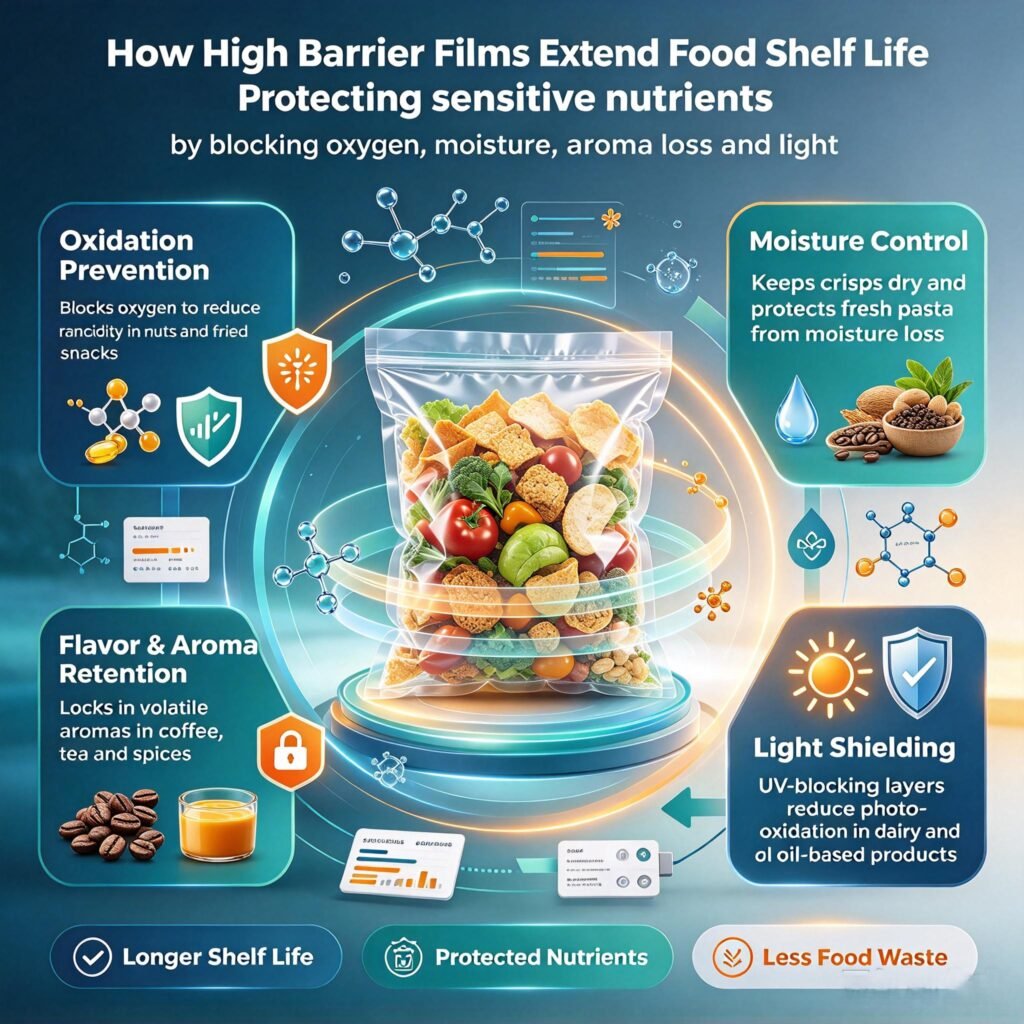
High-barrier flexible structures protect sensitive food nutrients through several critical mechanics:
Oxidation Prevention: Prevents fats and oils from becoming rancid in high-fat foods (e.g., nuts, fried chips).
Moisture Control: Keeps crisp foods dry while preventing wet foods (e.g., fresh pasta) from losing moisture content.
Flavor & Aroma Retention: Locks in volatile aromatic compounds in premium roasted coffee, tea, and spices.
Light Shielding: UV-blocking layers prevent photo-oxidation and nutrient degradation in sensitive dairy or oil-based products.
The Shift Toward Sustainable High Barrier Packaging
With global regulations pressing for circular economies, traditional non-recyclable multi-material laminate films (like PET/ALU/PE) face environmental pushback. The packaging industry is rapidly evolving toward:
Mono-Material Recyclable Solutions: PE-based or PP-based mono-material laminates with ultra-thin EVOH or MDO-PE technology that meet mono-material recycling streams without losing shelf-life performance.
Bio-based High Barrier Coatings: Renewable barrier coatings derived from starches, cellulose, or PHA designed for home-compostable packaging.
Frequently Asked Questions (FAQ)
What is considered a “high barrier” in food packaging?
Generally, a film is classified as a high oxygen barrier if its OTR is lower than 1-5 cc/m²/day, and a high moisture barrier if its WVTR is under 1-2 g/m²/day.
Can high barrier films be recycled?
Traditional multi-material films (e.g., PET layered with Aluminum Foil) are difficult to recycle. However, modern innovations in PE/EVOH-PE mono-material structures allow for full recycling in standard polyolefin streams.
Key Takeaways for Packaging Buyers
Selecting the optimal barrier film structure requires balancing product shelf-life requirements, processing conditions (such as hot-fill or retort sterilisation), and sustainability goals. Working with an experienced flexible packaging manufacturer ensures you achieve optimal product protection without over-specifying material costs.