
Product Packaging Bag Guide: Materials, Types & Practical Tips
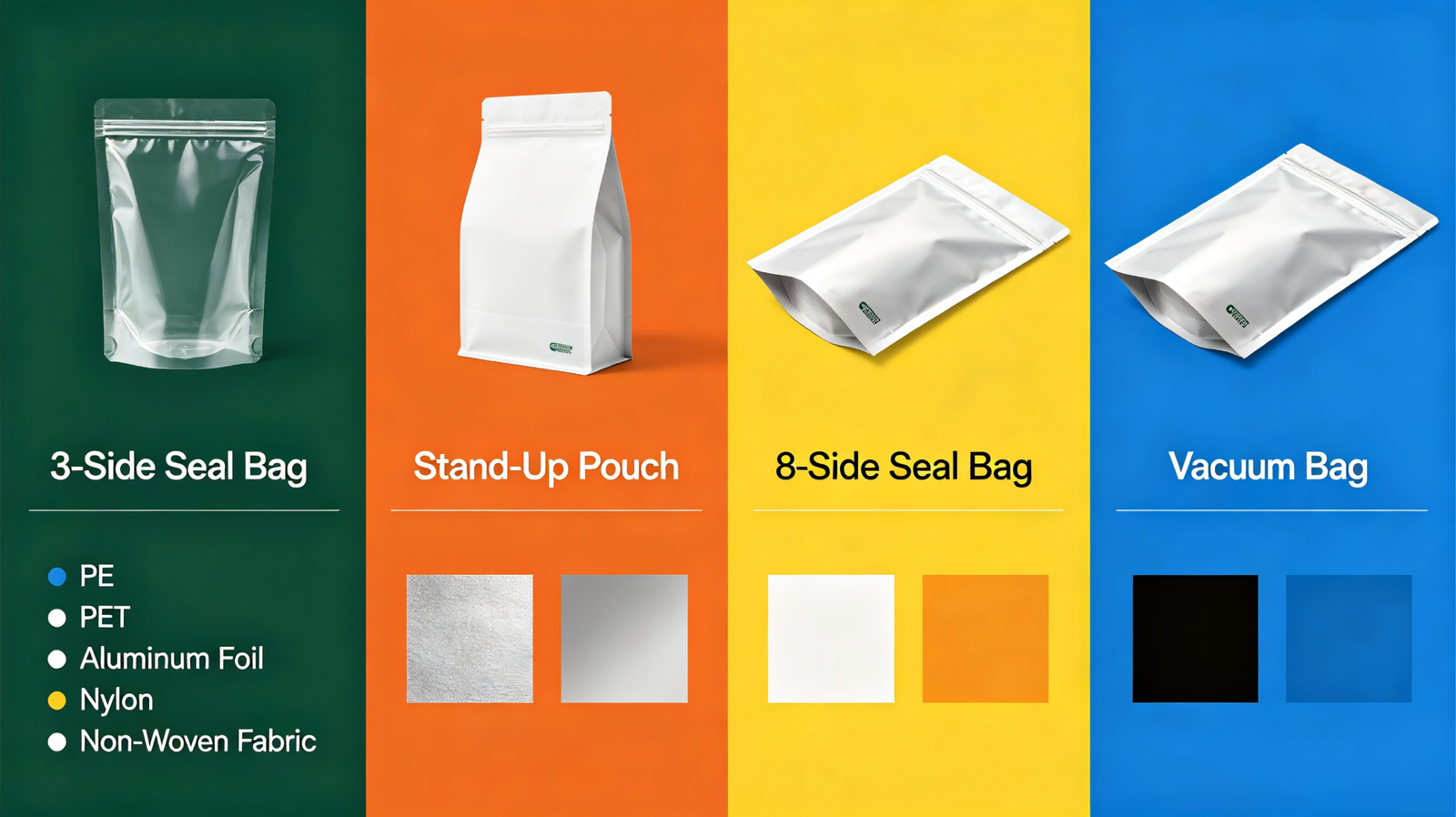
Product packaging bags are far more than simple containers in the entire commodity circulation chain. They serve as core carriers for product protection, quality preservation, transportation durability, and brand display. Suitable packaging bags can effectively reduce product loss, enhance shelf texture, and build consumer trust for various industries including food, daily chemicals, beauty care, electronics, and pet supplies. In contrast, improper selection of materials, bag types or craftsmanship will easily cause problems such as air leakage, moisture damage, breakage and color fading, negatively affecting product sales and brand reputation.
Many brand merchants often make mistakes by blindly following trends or only focusing on low prices when customizing packaging bags. This article comprehensively popularizes professional knowledge about product packaging bags from five core dimensions: mainstream materials, common bag types, functional adaptation, practical pitfalls, and environmental trends, helping businesses select the most suitable packaging for their products and brand positioning.
1. Mainstream Packaging Materials & Application Scenarios
Material determines the safety, barrier performance, wear resistance, temperature resistance and cost of packaging bags. Different materials have distinct physical and chemical properties, corresponding to different product categories. Below are the most widely used packaging materials in the commercial industry.
1.1 PE (Polyethylene)
PE is the most widely used packaging material on the market. It features soft texture, strong toughness, excellent tensile resistance, waterproof and moisture-proof performance, and non-toxic, odorless safety. HDPE (High-Density Polyethylene) has higher hardness and better load-bearing capacity, while LDPE (Low-Density Polyethylene) is softer with higher transparency.
1.2 PET (Polyester)
PET is famous for its high transparency, excellent gloss, rigidity and friction resistance. It restores printing colors accurately to perfectly display product appearance, and owns good anti-oxidation and air-proof performance. Its only drawback is slight brittleness with reduced toughness in low-temperature environments.
1.3 Aluminum Foil
Aluminum foil and metallized film are high-barrier functional materials that completely isolate light, oxygen and water vapor. With high temperature resistance, anti-oxidation and excellent moisture-proof performance, they can preserve product quality for a long time. Pure aluminum foil offers top-level barrier performance (opaque), while metallized film is cost-effective with slight light transmittance.
1.4 PA (Nylon)
Nylon material boasts extreme toughness, strong puncture resistance, tensile resistance and low-temperature resistance. It has excellent sealing performance, perfectly adapts to vacuum packaging, and effectively avoids bag breakage and air leakage during transportation.
1.5 Non-Woven Fabric
Non-woven fabric packaging is breathable, durable, washable and reusable with three-dimensional printing effects. As a green and low-carbon packaging material, it can bear 5-10kg weight and highlights environmental brand concepts.
2. Common Bag Types & Product Matching
Besides materials, bag structure directly affects shelf display effect, storage capacity, transportation stability and user experience, becoming a key factor for brand differentiated packaging. Here are 4 mainstream commercial bag types:
2.1 Side Seal Bag:As the most basic bag type, it adopts three-side heat sealing and single-side opening design. It features simple structure, good airtightness, low cost and lightweight volume. The only limitation is that it cannot stand independently and is suitable for flat placement.
2.2 Stand-Up Pouch: Equipped with a bottom gusset design, the pouch can stand steadily after being filled with products. It offers large printing areas on both front and back sides for brand promotion, delivering an excellent shelf display effect. Optional zippers and spouts enable repeated opening and liquid storage functions.
2.3 8-Side Seal Bag: stand-up pouches with additional side gussets, the 8-side seal bag features a square and three-dimensional shape with high stiffness. It has stronger load-bearing capacity and larger printing space, effectively upgrading brand grade and product texture.
2.4 Vacuum Bag : Professional Fresh-Keeping & Protection
Made of high-toughness PA+PE composite materials, vacuum bags have excellent airtightness and puncture resistance. They can completely exhaust internal air to isolate oxygen and bacteria, effectively extending product shelf life and preventing deterioration and damage during transportation.